Essex-based Digital Marketing Agency providing services like SEO, Content Marketing, Social Media Management, Web Design & Development, Video Editing, Branding, UI/UX & Email Marketing
WEB


Development
Marketing Services
Graphic Design
Packages
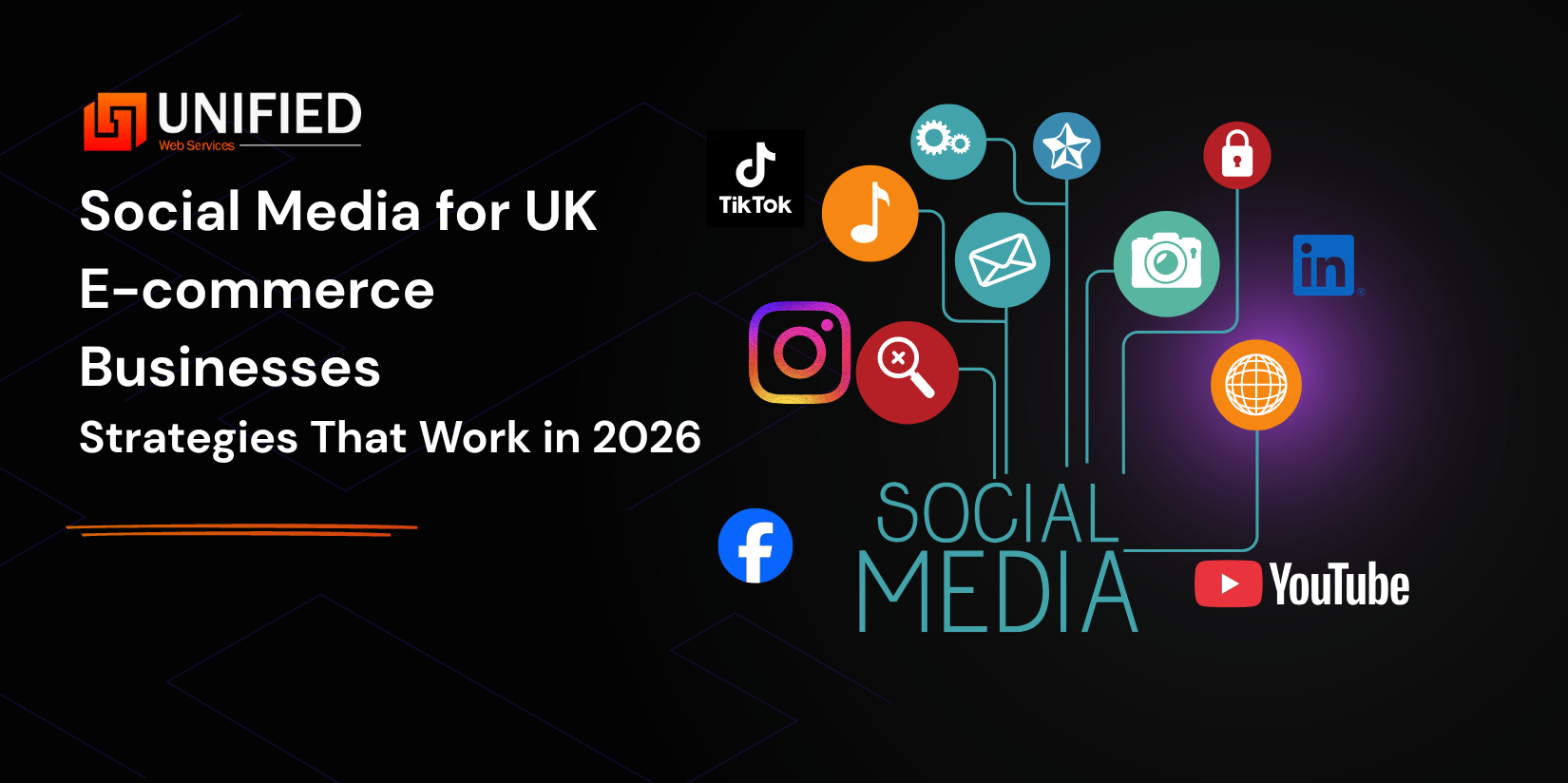
A customer can discover a product on TikTok, compare it on Instagram, read reviews on Facebook and complete the purchase without ever visiting a traditional search engine. That is the opportunity social media creates for e-commerce businesses in 2026.
Social platforms have become more than places to publish promotional posts. For UK e-commerce businesses, social media has become an important part of the shopping journey, influencing product discovery, building trust and generating direct sales.
Brands that treat their social channels as part of the sales process are seeing real growth in 2026. They are choosing the right platforms, creating useful content and making it easier for customers to take the next step.
For UK online retailers, this shift changes how products are discovered, considered and converted into sales.
Social media gives e-commerce brands a direct way to reach customers at different stages of the buying journey. It replaces search engines and email marketing, allowing customers to browse, compare and buy without leaving the app.
UK social commerce is growing, with sales forecast to reach around £11.75 billion in 2026.
Customers still visit e-commerce websites, but many first discover products through social content. They may see a demonstration on TikTok, compare opinions on Instagram or click through from a creator’s recommendation before visiting a website.
Shoppers used to spot a product on social media, then search for it on Google before buying. Product tags, shoppable posts, creator content and In-app checkout can make it easier for customers to confirm an order within seconds.
This does not mean every brand should move its entire sales process to social media. A well-designed website remains important for building trust, managing product information and developing lasting customer relationships. Social media should support the website, not replace it completely.
Many Consumers use social platforms to research product ideas, demonstrations, reviews and brands. Search behaviour is becoming more visual, conversational and focused on recommendations.
Product-focused captions, hashtags, clear descriptions, relevant keywords, useful videos and genuine customer experiences can all help your content become easier to find. For e-commerce brands, this means visibility on social platforms is now just as important as ranking on page one of Google.
Every platform attracts different audiences and encourages different types of content. The right choice depends on customer behaviour, product category, content resources and shopping features.
Consider where your customers already spend time, what type of content they engage with and how naturally your products fit the platform.
Instagram is particularly suitable for e-commerce brands, including fashion, beauty, food, homeware and lifestyle products. High-quality product photography, Reels, Stories, customer testimonials and behind-the-scenes content can all turn interest into sales.
Shopping tags allow customers to view prices and product details within a post or reel, then proceed directly to checkout. Before setting up Instagram Shopping, check eligibility requirements, product policies and the availability of supported features for your market.
TikTok works well for products that can be demonstrated quickly or connected to a particular lifestyle. Product tutorials, comparisons, reactions, unboxing videos and customer stories can all perform well when they feel natural.
TikTok Shop has strengthened the connection between entertainment and purchasing in the UK. Retail Gazette reported that more than 300,000 UK small businesses were selling through TikTok Shop by July 2026.
A founder explaining how a product solves a common problem may feel more credible than a polished sales message. A clear idea, strong opening and useful demonstration can be more valuable than an expensive video with no clear message.
Facebook remains valuable for reaching older audiences and supporting community-based sales through groups and marketplace listings. It remains useful for communities, retargeting and reaching established audience segments.
Pinterest is useful for products connected to planning and inspiration, including interiors, weddings, clothing, recipes, gifts and home projects. It allows business accounts to tag products and create product Pins, but some features may require merchant review.
The key is to choose platforms based on customer behaviour rather than trying to maintain an identical presence everywhere.

A successful social strategy combines content, community, social proof and conversion opportunities. Posting consistently is important, but instead of posting random posts, focus on what customers need to know before buying.
Use social commerce features to make product discovery and purchasing easier. Include accurate product names, current prices, clear images and links to the correct product page.
Shoppable content should offer value. Show styling ideas, product guidance or recipes alongside promotional content.
User-generated content provides authentic social proof and helps customers understand product experiences.
Encourage customers to share photos, videos and reviews. With permission, reuse this content across social media, product pages and adverts.
Honest reviews that mention both strengths and limitations often appear more credible than exaggerated claims.
Choose micro-influencers based on audience relevance, content quality and trust, not follower numbers alone.
Provide clear product information, key requirements and advertising disclosures while allowing creators to maintain their own voice. Content that feels natural to their usual style can be more credible.
Organic content can build trust, while paid social helps a brand reach specific audiences more consistently. Start with a clear objective, such as product sales, email sign-ups or qualified website visits.
Retargeting can remind people about products they have already viewed or added to their basket. Retargeting can bring that customer back with relevant products, reminders, reviews or carefully timed offers.
Cart abandonment campaigns can be particularly useful for e-commerce businesses because they reconnect with shoppers who have already reached a high-intent stage.
Lookalike audiences can help platforms find people with characteristics similar to existing customers. AI-driven targeting may also help identify potential buyers, but performance still depends on accurate tracking, strong creative work and useful landing pages.

Use the following content ideas to create a varied publishing plan:
Strong e-commerce content should not make every post feel like a sales message. Useful information, engaging content and genuine customer reviews can be just as valuable as promotional posts.
Social media success for UK e-commerce businesses in 2026 depends on choosing the right platforms, creating content that builds trust and using paid strategies to reach people ready to buy.
Managing platforms, content and paid spend requires regular attention and the right strategy. Unified Web Services works with UK e-commerce brands to turn social media engagement into consistent and repeatable sales.
Unified Web Services supports e-commerce brands with practical social media marketing in Essex, creating useful content and connected campaigns that help brands build visibility, trust and sustainable online sales.
For e-commerce brands that want social media, content, e-commerce website and wider marketing activity to work together, Unified Web Services, a Digital Marketing agency in Essex, can provide a connected approach. We support e-commerce businesses with social media strategies, e-commerce website design, content creation and video editing, helping brands turn attention into meaningful customer action.
Want to build a social media strategy that supports your e-commerce growth? Get in touch with Unified Web Services and let’s plan a social media strategy that supports your e-commerce goals.